Car accident history check UAE
Check a used car for past accidents, salvage and flood damage before you pay. Enter the chassis number to see the accident, damage and salvage records held for it, where available — especially valuable on cars imported from the US and Europe.
Full report AED 39 — one-time payment, no subscription.
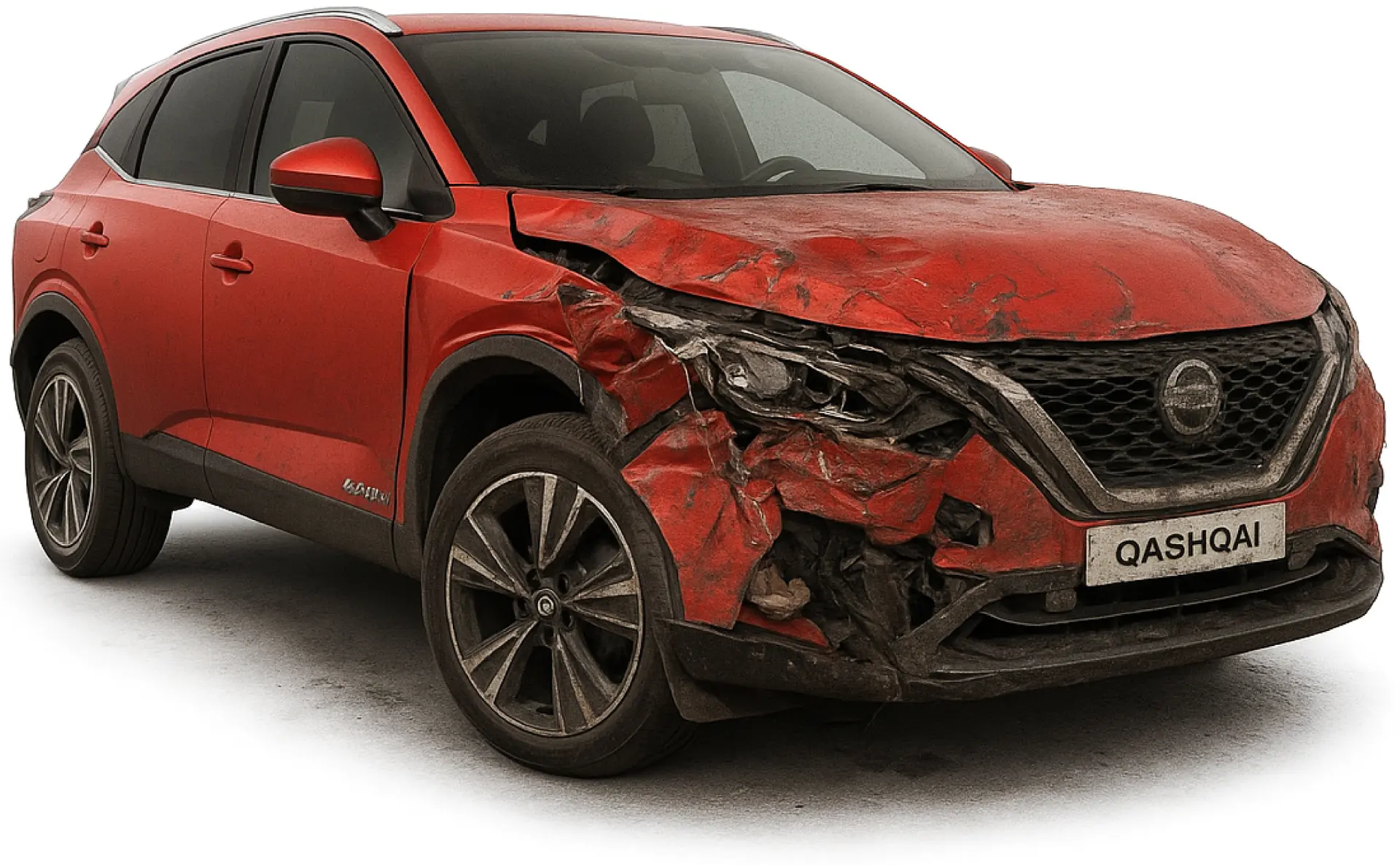
Carlytics helps UAE used-car buyers check a car's accident history by chassis number. The full report — AED 39, one-time payment — includes accident and damage records where available, salvage, flood and auction records for cars imported from the United States where available, European registration, inspection and mileage records for cars with a European past, open safety recalls and a stolen-vehicle check.
Why accident history is hard to see in the UAE used market
A well-repaired car looks like any other car. The history is in the records and in the details — and for an imported car, some of the most important records were made in another country.
The UAE's used market mixes cars sold new in the region with a large number of imports. A car imported from the United States may have been declared a total loss after a collision or a flood, sold at auction, repaired and shipped. Once it is re-registered here, nothing on the local paperwork tells you that happened.
European imports carry a different trail: years of registrations, inspections and odometer readings in their home country. Where those records exist, they show whether the car's story — and its mileage — holds together.
In both cases the chassis number is what connects the car in the showroom to those records. That is why every accident history check starts with it.
What the accident history report shows
Every report runs on the chassis number and costs AED 39. Records are shown where available for that chassis number.
Full chassis-number decode
Make, model, body style, engine, transmission, drive, model year information and the plant and country where the car was built.
Factory equipment and build data
For many European cars — BMW, Audi and the wider Volkswagen group including Bentley, and Land Rover — the factory options and build details the car left the line with, where available.
Open safety recalls
Recall campaigns recorded for the model, so you can ask the seller or dealer to confirm the work was done.
Stolen-vehicle check
The chassis number checked against public stolen-vehicle databases.
Accident and damage records
Accident and damage records linked to the chassis number, where available.
Salvage, flood and auction history
For cars imported from the United States: salvage, flood and auction records for the chassis number, where available.
Mileage records and rollback check
Dated odometer readings checked for signs of rollback, where available.
European history for European imports
If the car spent part of its life in Europe: dated registration and inspection records, where available.
How to check a car's accident history in the UAE
Seven steps, from the advert to the handshake. The report covers the records; the inspection covers the metal.
- 1
Get the chassis number first
Ask for the full 17-character chassis number before you view the car. You can run the check from your phone while you are still deciding whether to go.
- 2
Run the chassis number check
Decode it free to confirm the make, model and build origin, then unlock the full AED 39 report for accident, damage, salvage and flood records where available.
- 3
Match the number on the car
The registration card, windscreen plate, door-pillar label and frame stamping must all agree. On a rebuilt car, mismatched labels are a classic sign of replaced panels or worse.
- 4
Ask for the paperwork
Ask the seller for the service book, repair invoices and any insurance-claim paperwork for the car's time in the UAE. Honest sellers of repaired cars usually have it.
- 5
Read the bodywork
Look for uneven panel gaps, paint that does not quite match in daylight, overspray on rubber seals and tool marks on the bolts that hold the wings, bonnet and doors.
- 6
Check the airbags and the glass
The airbag warning light should come on at start-up and go out within seconds. Glass and headlights carry date labels; one window much newer than the rest deserves a question.
- 7
Book an independent inspection
Ask an independent workshop to put the car on a lift and check the chassis rails, floor and suspension mounts for repairs, and the seat rails and wiring for signs of flood water.
Signs of a past accident, salvage or flood
What to look for with your own eyes, and what the records can add.
Collision repairs
Fresh paint in door shuts, replaced bonnet or wing bolts, filler under the paint and new headlights on an older car all point to collision repair. None of them makes a car a bad buy — but each one should be explained and reflected in the price.
Salvage and rebuilt imports
A car declared a total loss abroad can be rebuilt and imported perfectly legally. The concern is not that it happened but that it is hidden. Salvage and auction records for the chassis number, where available, are the most direct way to find out.
Flood damage
Silt under carpets and in the spare-wheel well, corrosion on seat rails and under the dashboard, a musty smell and electrical faults that come and go are the classic signs. Flood records for imported cars appear in the report where available.
Mileage that does not fit
Accident cars and odometer tampering often travel together. The report shows dated mileage records and checks them for signs of rollback where available; compare them with the dashboard and with the wear on the seats, wheel and pedals.
What we check for when preparing a report
Carlytics is the largest online database of used vehicle records. It contains more than a billion data points from all over the world.
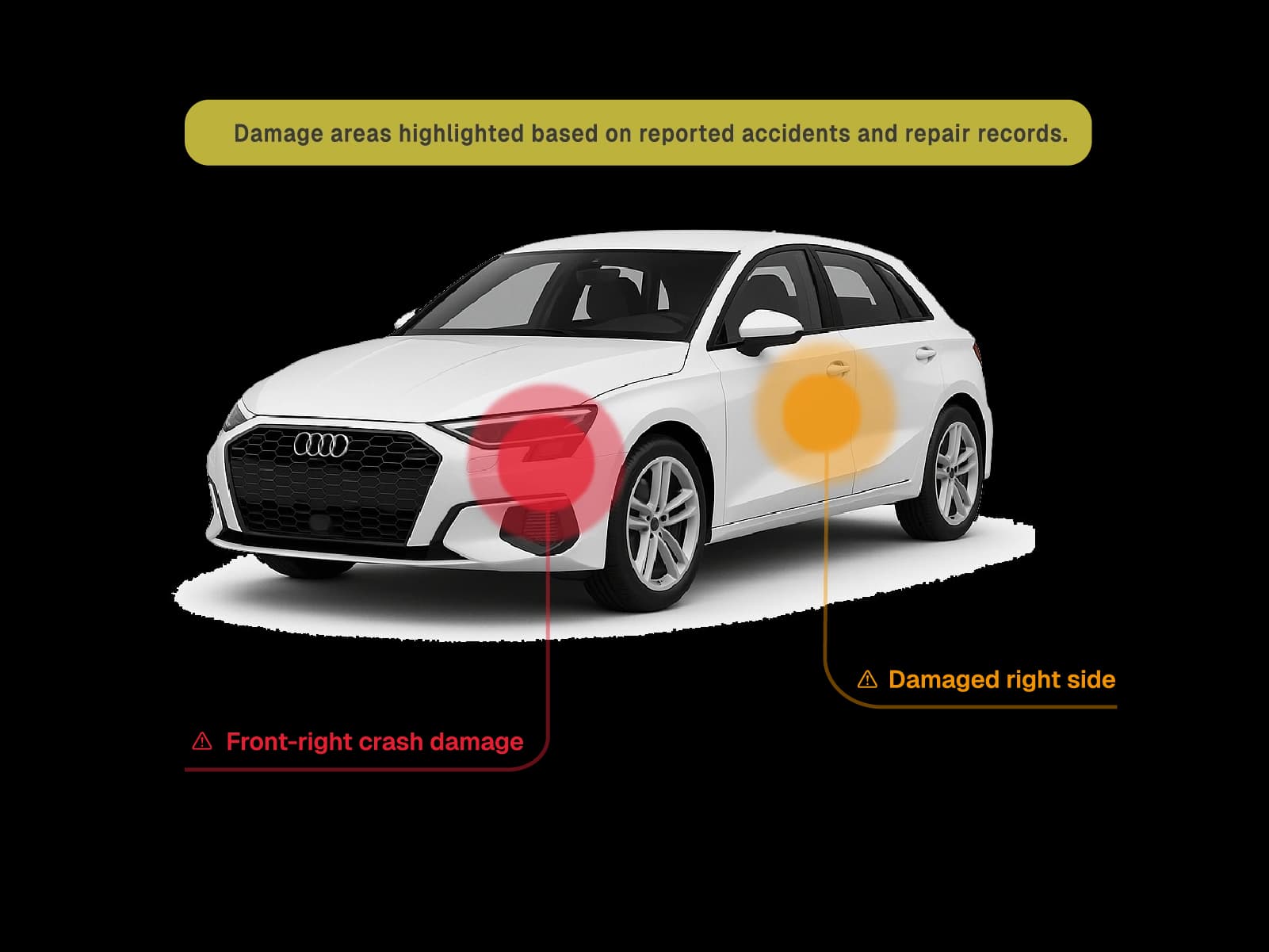
Damage
The report includes accident and damage records where available for the VIN. No record found is not proof the car was never damaged. Damage can lower the car's value and cause safety problems. Our report helps you avoid cars with hidden damage that sellers might not tell you about.
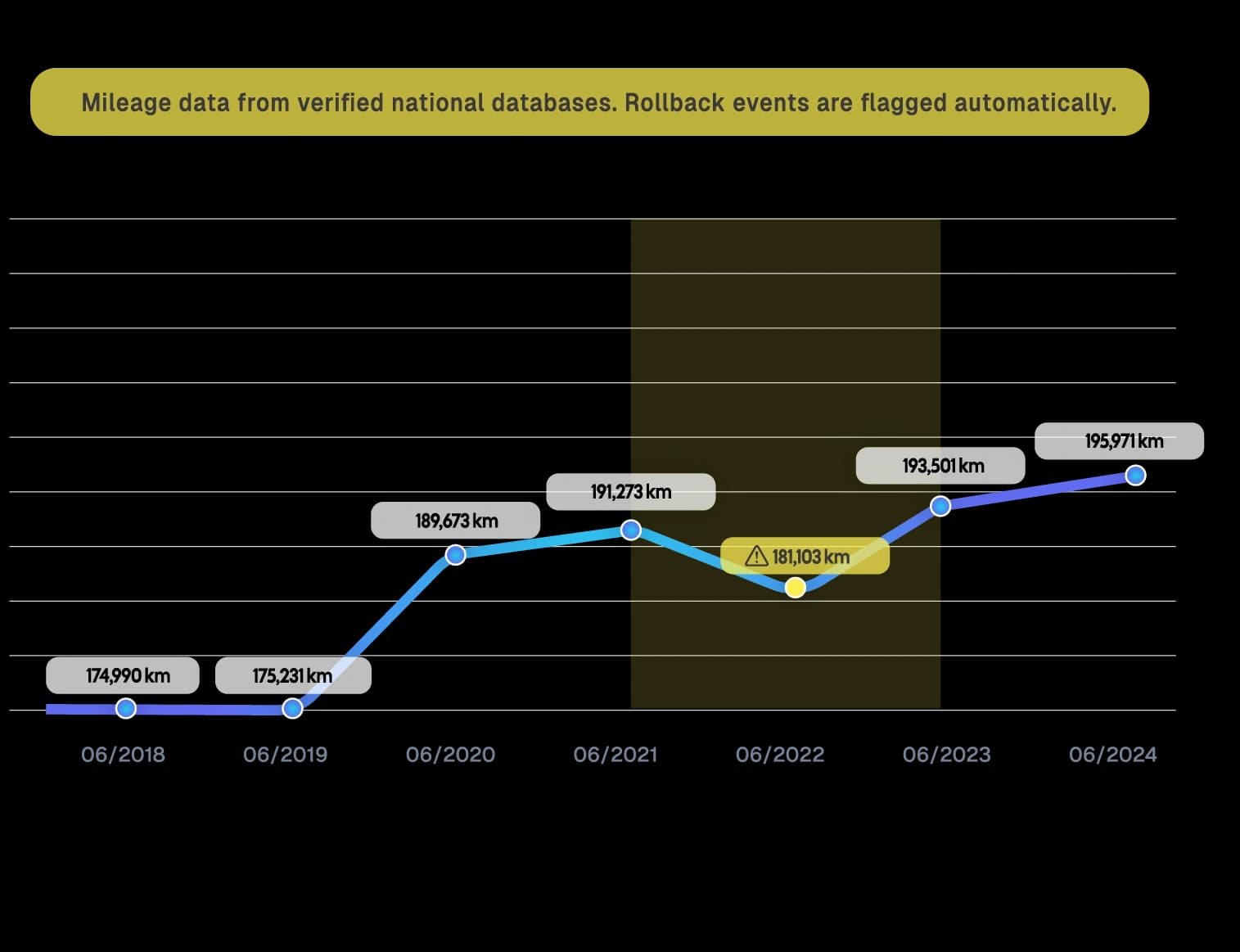
Mileage rollbacks
We look for signs that the mileage might have been changed. Some sellers lower the mileage to make the car look newer. We check mileage records from different databases to make sure the numbers are honest.
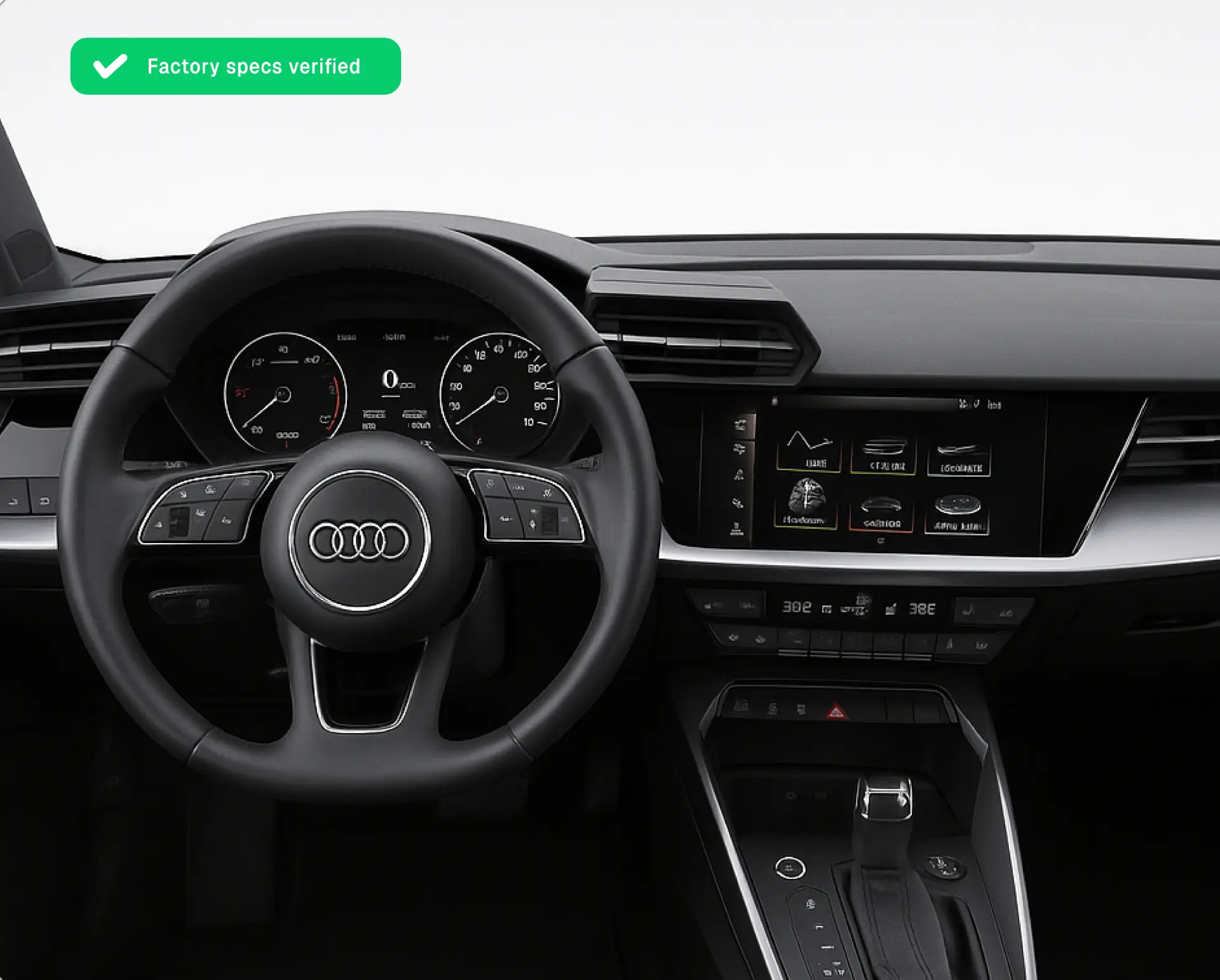
Specs & equipment
We list the car's original features and equipment. This helps you see if anything is missing or changed. You'll know exactly what the car should have when it left the factory.
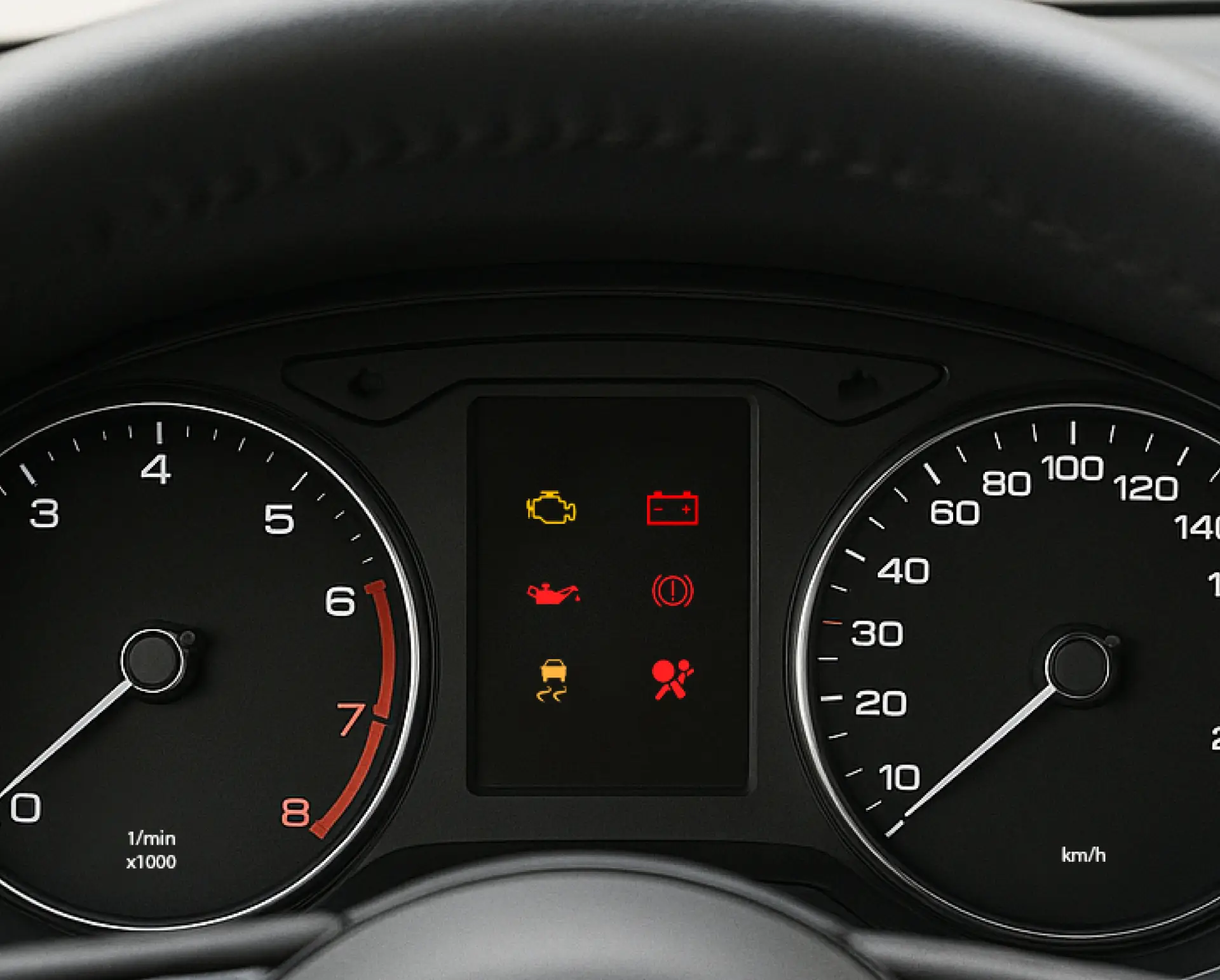
Safety
Manufacturers typically issue safety recalls to fix harmful defects. Make sure your car doesn't have any before taking it on the road and also learn its general safety rating.
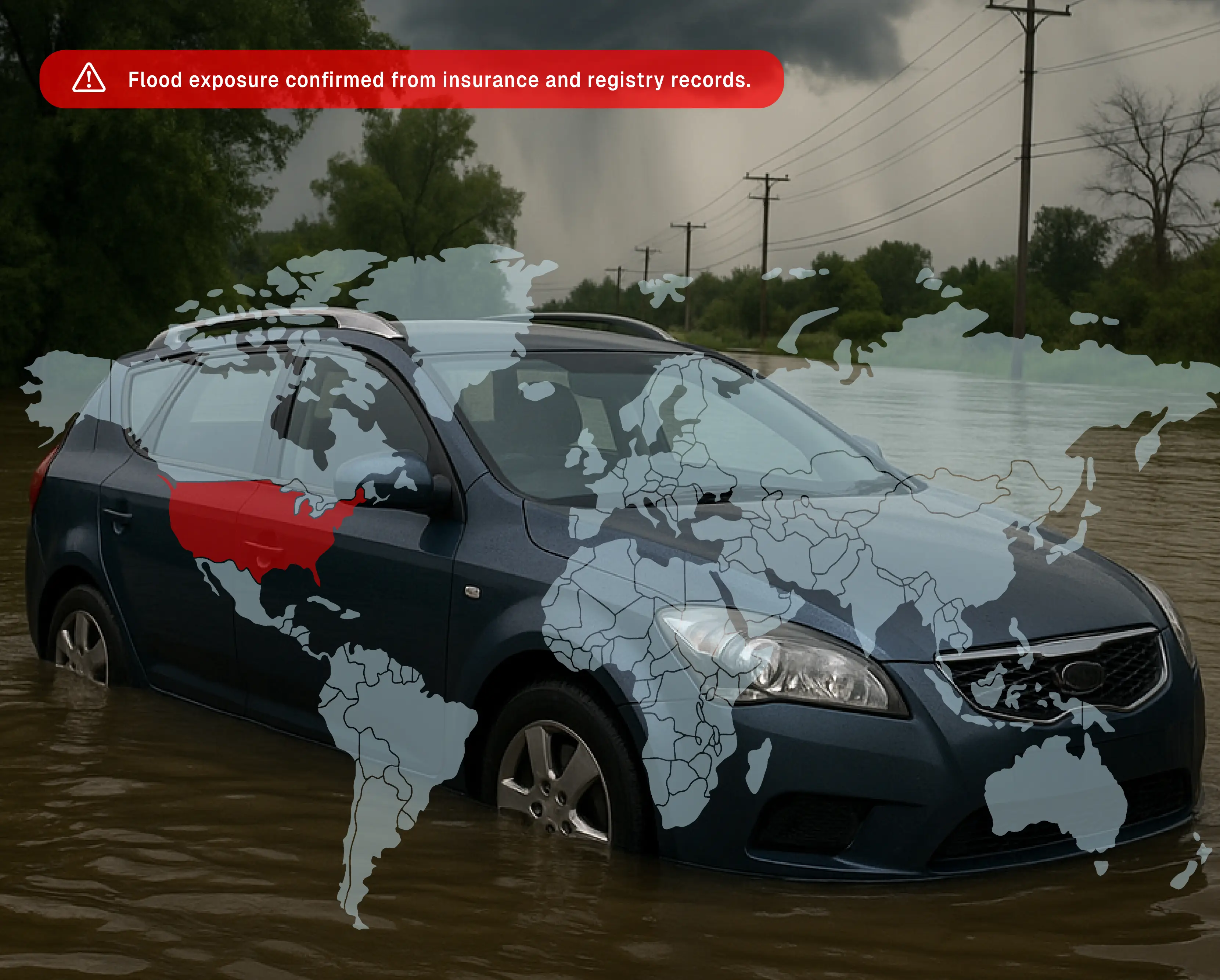
Natural disaster
Check if the vehicle has been damaged in floods, hurricanes, or other natural disasters.
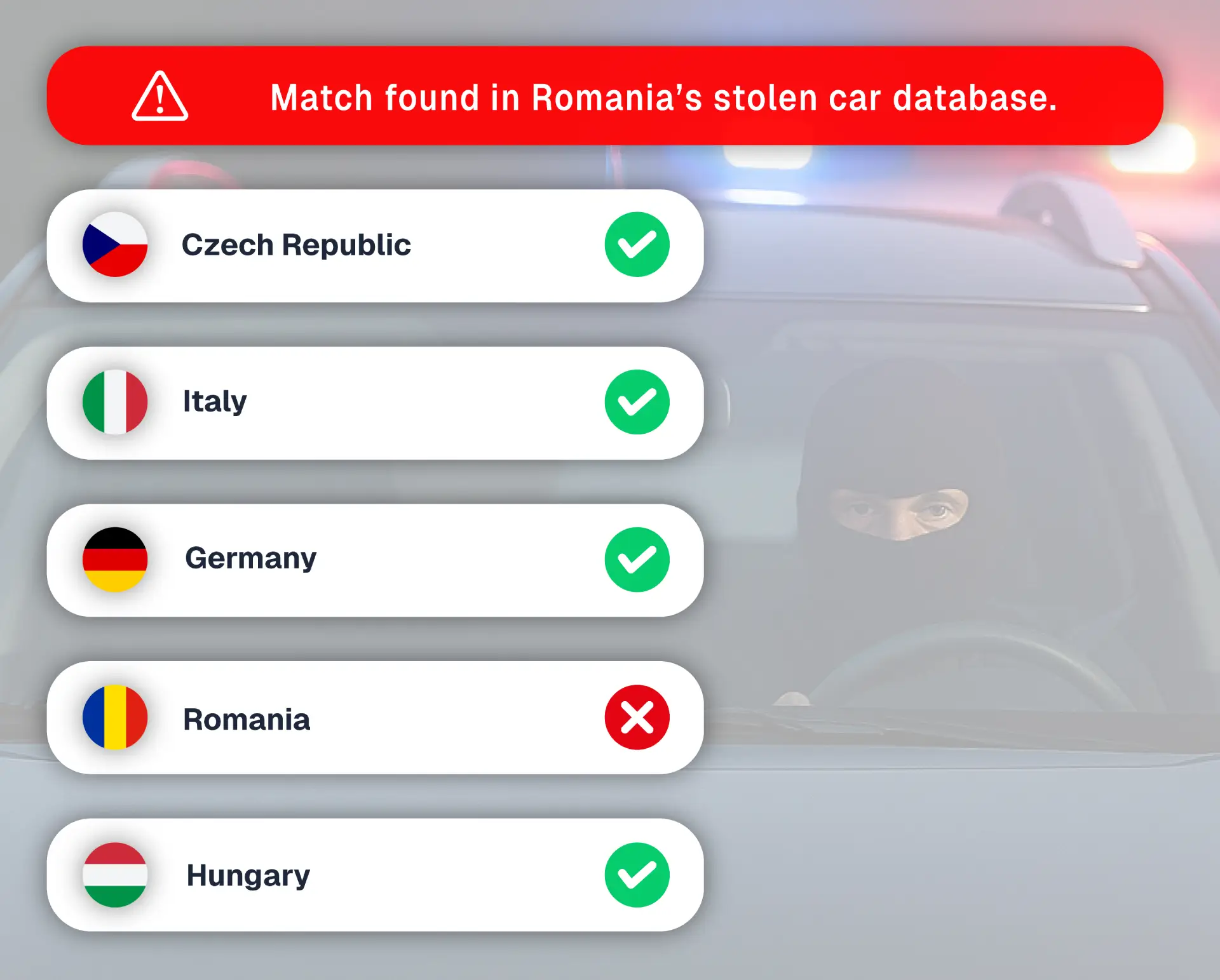
Stolen car database
We check police and insurance records to see if the car has been reported stolen. Buying a stolen car can lead to big legal and financial problems. Our report gives you peace of mind.
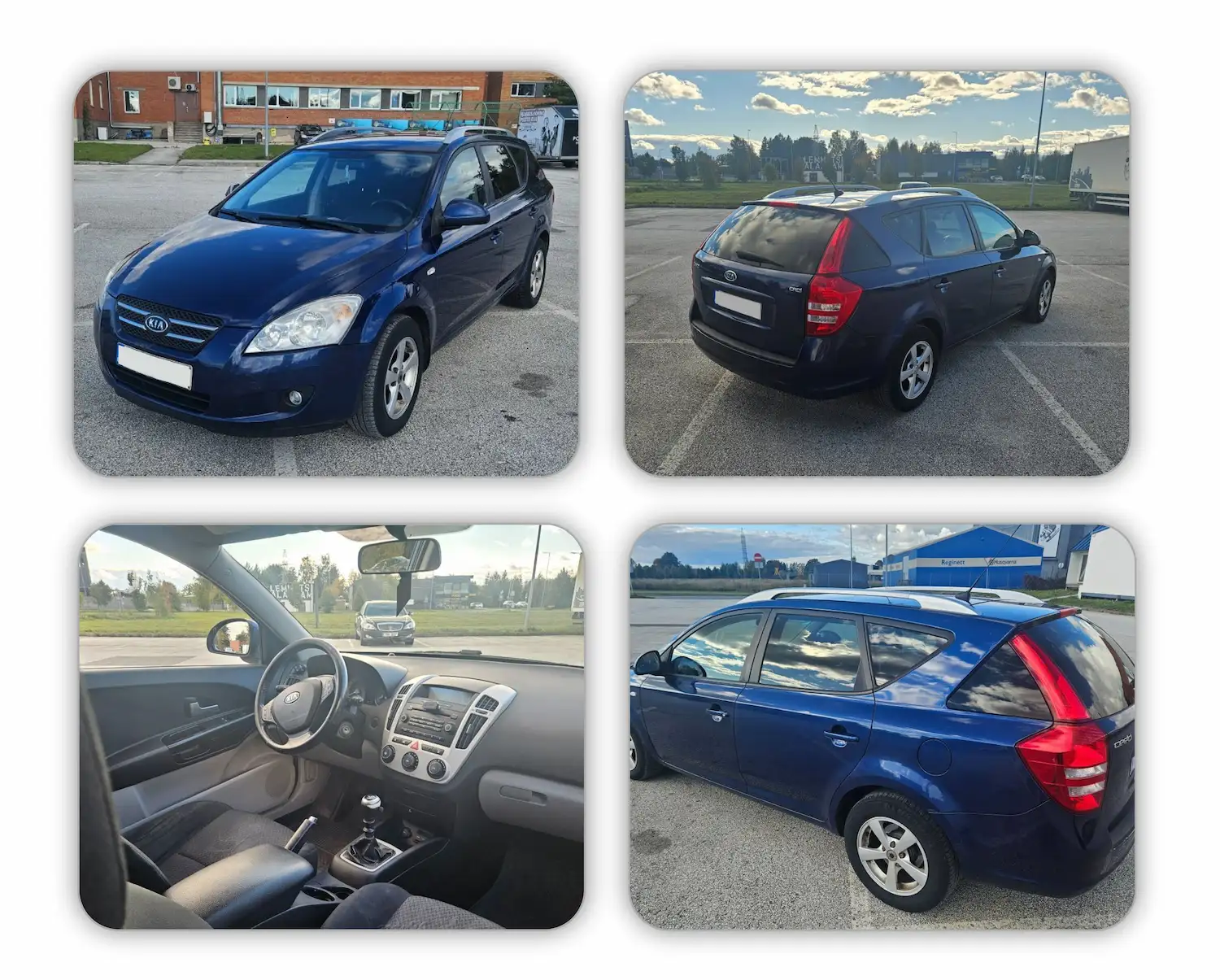
Photos
If available, we include old photos or auction pictures of the car. These photos can show past damage, repairs, or changes that you might not notice in person.
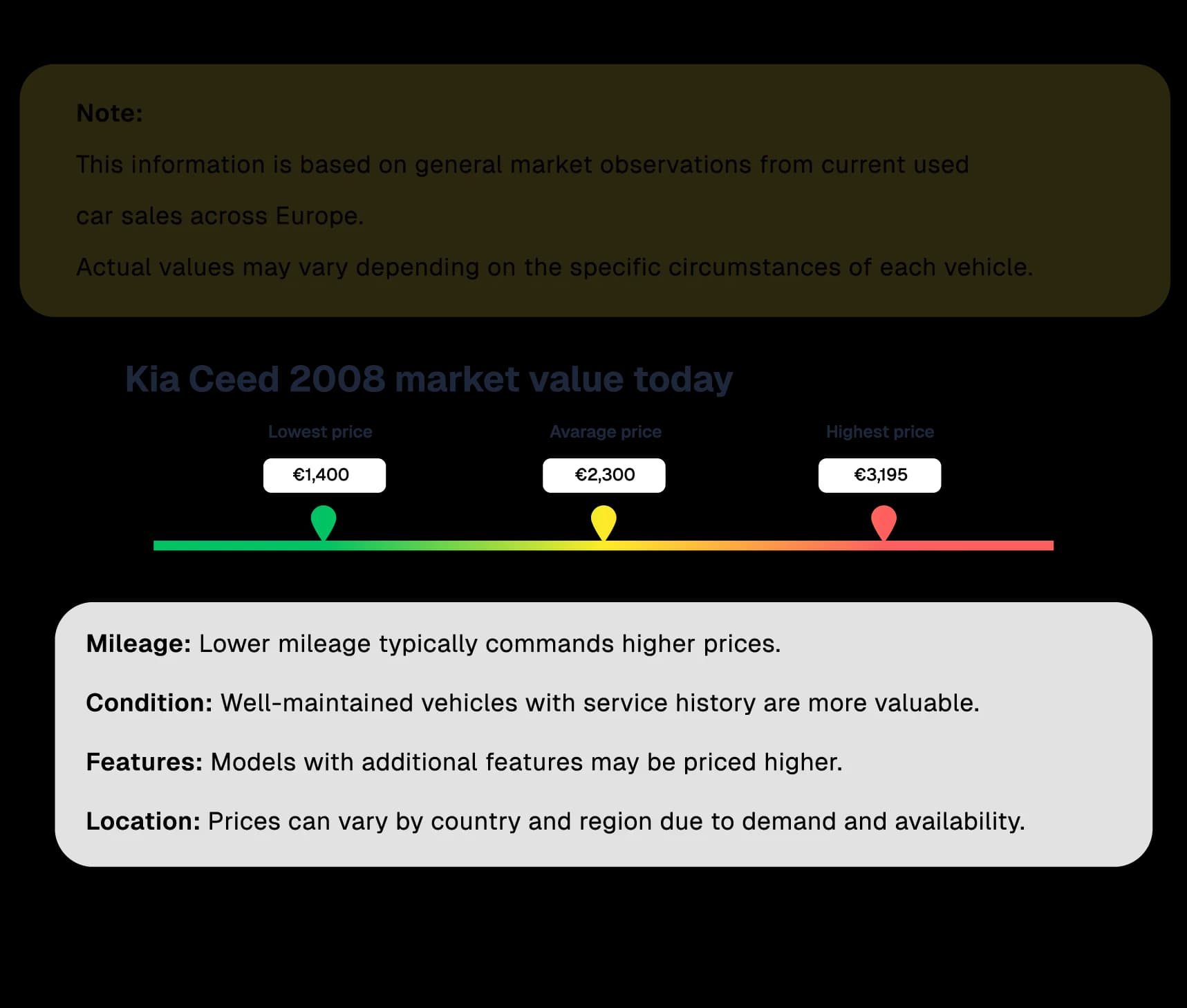
Market value
We compare prices from many sources to show the car's fair market value. This helps you know if the price is good or too high, so you can make a smart deal.
Trusted in 47+ countries worldwide
Carlytics aggregates vehicle data from 47+ European countries, pulling from national registries like Finnish Traficom (5M vehicles), Dutch RDW, Czech ISTP, and Danish DMR. Combined with NHTSA and EU Safety Gate recalls, the database covers 900M+ vehicles.
Access data from national registries,
insurance databases, law enforcement and more.

How It Works
Carlytics checks any VIN in under 10 seconds by cross-referencing 900M+ records from 47+ European countries. Enter a 17-character VIN, and the system searches NHTSA, EU Safety Gate and national registries to build a complete vehicle history report for AED 39.
Get comprehensive vehicle information in just a few simple steps. Our process is designed to be quick, easy, and informative.
Enter Vehicle Details
Enter your license plate or VIN number to start the check process.
Instant Processing
Our system quickly searches through billions of records to find your vehicle.
Comprehensive Report
Receive a detailed report with complete vehicle history and important alerts.
Make Informed Decisions
Use the insights to make confident decisions about your vehicle purchase or sale.
Ready to check your vehicle?
Enter the VIN number below to get a free instant report.
Sample Vehicle Report
Every Carlytics report covers 24 sections including decoded specs, mileage history, safety recalls, theft status, market value, and cross-border import records. The full report costs AED 39 and is available instantly as an interactive page and downloadable PDF.
Here's an example of the comprehensive vehicle report you'll receive. Our reports provide detailed information to help you make informed decisions about any vehicle.
Toyota Corolla (2019)
Silver • 1.8L • Petrol • Automatic
Vehicle Information
Technical Inspection Status
Vehicle Summary
Frequently Asked Questions
How do I check a car's accident history in the UAE?
Can I check accident history by chassis number?
Does the report cover cars imported from the USA?
What about cars imported from Europe?
How much does an accident history check cost?
Is a report enough on its own?
More chassis number checks for UAE buyers
Every check runs on the same chassis number and the same AED 39 report.
Chassis number check UAE
Decode any 17-character chassis number and see exactly what the car is.
European car import check
Porsche, Mercedes-Benz, BMW, Range Rover, Bentley: decode, factory equipment and European records.
Chassis number checks for the Gulf's favourite models
- Toyota Land Cruiser chassis check
- Nissan Patrol chassis check
- Toyota Prado chassis check
- Nissan Sunny chassis check
- Toyota Camry chassis check
- Lexus LX chassis check
- Mitsubishi Pajero chassis check
- Hyundai Accent chassis check
- Hyundai Elantra chassis check
- Kia Sorento chassis check
Buying an import? See the imported car check, the Chinese car VIN check, a full sample report or start from the UAE VIN check home.